
Skip to content
  • Free written estimates
  • Local crews
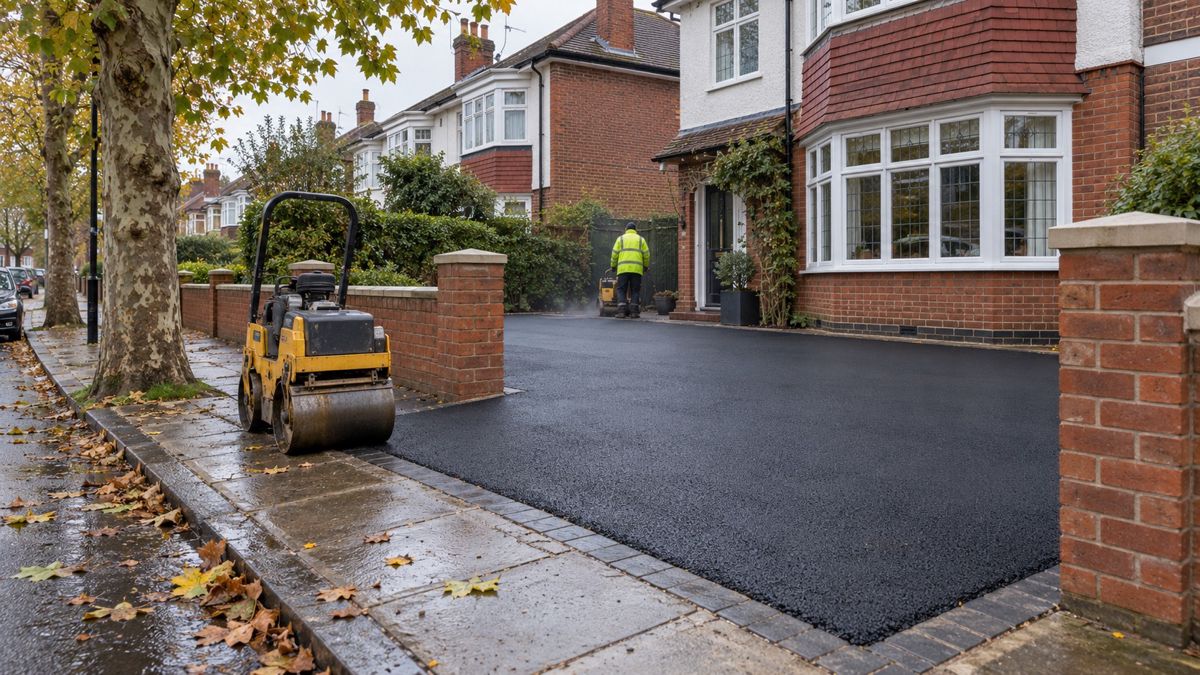
Freshly laid tarmac driveway at a brick semi-detached house in London

Riverside ground and tight terraced streets

Paving contractor in Kingston upon Thames

Drives, patches and car park work for Kingston's terraces and riverside streets. Request a quote and we will confirm availability and access needs.

  • Written quote after a site visit
  • Plain advice on council rules
  • Home and business surfaces

Step 1 of 3

What do you need?

Free written estimates
Local crews
Clear timelines
Site cleanup included

The Thames and the ground under your drive

Kingston upon Thames sits on the river, and the land close to the water is low and flat in many places. Ground like that tends to stay damp, and in a wet spell the water table can sit closer to the surface. Paving laid without a good sub-base and proper drainage can sink or crack in these conditions.

Further from the river, the area rises and the clay-heavy ground typical of London takes over. Whichever you have, the principle is the same: what happens under the tarmac decides how long it lasts. Our site visit looks at levels, soil and where the water runs.

Tight terraces, controlled parking and getting machines in

Kingston has a compact town centre and streets of Victorian and Edwardian terraces around it, in Surbiton and nearby districts too. Many roads have controlled parking, narrow carriageways and little space for a lorry. That affects how a paving job is carried out.

Machines and materials need somewhere to stand. If a bay outside your property must be suspended, the council usually handles that, and it can take notice. We talk through access, parking suspensions and delivery timing at the quote stage, because hand-laying a small area is different from rolling a large one.

What we can quote for Kingston homes and sites

We serve Kingston upon Thames with each service on this site, so one conversation can cover several jobs.

On small plots, a patch and a seal may be enough where a full relay is not needed.

Small does not always mean simple. A few particular factors apply.

  • Hand work. Where a roller cannot fit, laying and compacting by hand takes longer.
  • Ground moisture. Damp ground may call for a deeper stone base.
  • Levels. Floor levels at doors and thresholds limit how high new tarmac can go.
  • Waste removal. Taking away old material from a tight street needs planning.

We note these on the quote, so there are no surprises about what is and is not included.

The order of work on a damp plot can matter as much as the materials, so we explain the sequence as well as the total.

Flood risk, drainage and front garden rules

Some low-lying parts near the river are at risk of flooding, and sealed surfaces make surface water problems worse. That is the reason for the front garden rule: laying more than five square metres of non-permeable surface generally needs planning permission, unless water drains to a lawn or border or the surface is permeable.

Permeable tarmac and block options exist, and a soakaway is not always practical on wet or clay ground. The council can advise what applies to your road. A new dropped kerb also needs highway authority approval. We help you work out which questions to ask, and you confirm the answers.

Requesting a Kingston quote

Call 020 7946 0921 or use the short form. We serve Kingston upon Thames but are not based there, so your request is how we confirm availability.

  1. Give the address and describe the surface you have now.
  2. Tell us about parking on the street and how vehicles reach the property.
  3. Add photos, including the entrance and any damp spots.
  4. We visit, measure and check levels and access.
  5. A written quote follows, with the work and any exclusions in plain words.

You are under no obligation to accept it, and a second opinion on the same site is a perfectly sensible step.

Step 1 of 3

What do you need?

Questions about Kingston upon Thames

Can paving be laid on damp ground near the river?

Yes, but the sub-base needs thought. Damp ground often calls for a thicker stone layer and good drainage so water does not soften the base. We check how the soil behaves at the visit and describe what build-up we recommend. A short test, such as a trial hole, can show how wet the ground is.

What if I cannot park a lorry outside?

It is a common issue on terraced streets. Options include requesting a bay suspension from the council, using smaller vehicles for deliveries and moving materials by hand. We discuss what is possible at the visit and adapt the plan so the job can still be done properly. Hand barrows and small rollers can make a surprising amount of difference on a tiny plot.

Do I need a bay suspension for the work?

Possibly, if the road is controlled and vehicles must stand outside. Suspensions are arranged through the council and need notice. We tell you what we need and when, and you or we can apply, depending on what you agree. Give the council enough notice, as bay suspensions are rarely arranged at short notice.

How thick should tarmac be on a family drive?

It depends on the base and the vehicles. A drive for cars needs less thickness than one that takes vans or occasional heavy deliveries, and a good sub-base matters at least as much as the top layer. We explain the build-up in the quote. Vehicles that stay on the drive for long periods, such as a camper, need a stronger base.

Will new tarmac make my house flood?

It should not, if levels are right. Falls need to carry water away from the house and into a drain, border or soakaway. A poorly set drive can send water toward the front door, so we check floor levels and falls before laying. Ask us to point out the finished level at the door sill before we start.