
Skip to content
  • Free written estimates
  • Local crews
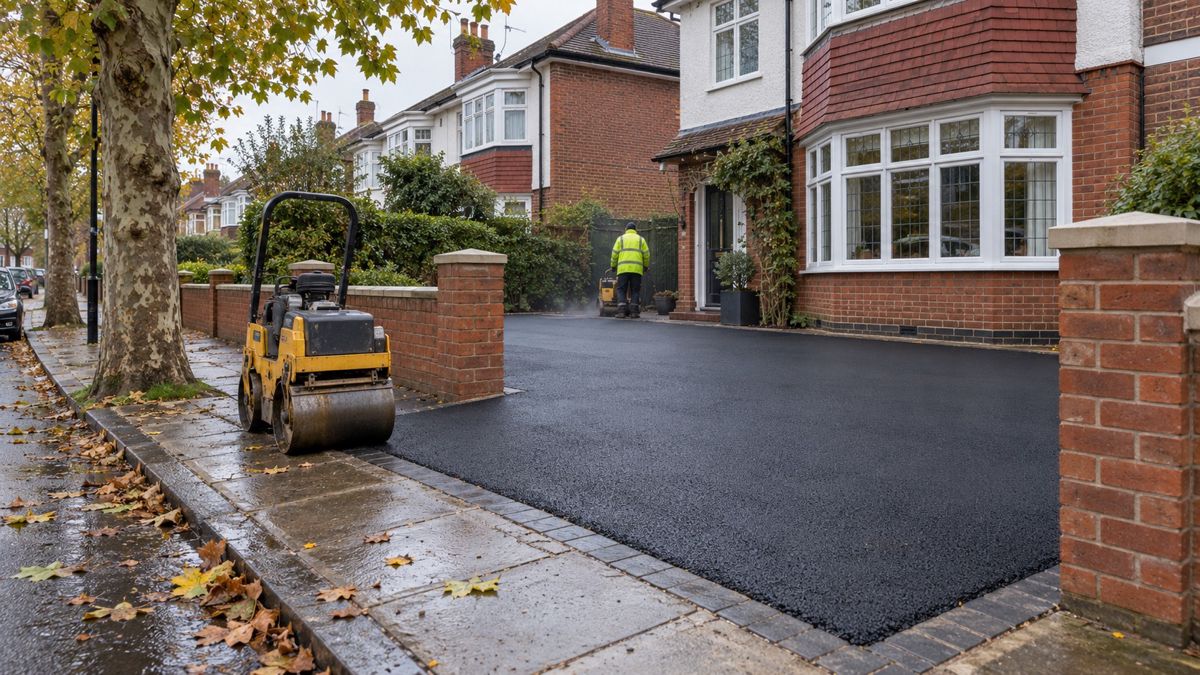
Freshly laid tarmac driveway at a brick semi-detached house in London

Long drives, mature trees and leafy streets

Driveway paving for Bromley homes

Tarmac drives, sealing and repairs for Bromley's longer, tree-lined plots. Send a quote request and we will confirm availability for your address.

  • Written quote after a site visit
  • Plain advice on council rules
  • Home and business surfaces

Step 1 of 3

What do you need?

Free written estimates
Local crews
Clear timelines
Site cleanup included

Why Bromley drives are a different kind of job

Bromley is London's largest borough by area, and it feels more like the Kent border than inner London in many places. Detached and semi-detached houses on generous plots are common, with longer drives, mature trees and plenty of hedges. A drive here is often more than a place to leave a car. It is a long approach that frames the house.

Longer drives mean larger areas of tarmac, more edges to look after and more places for water to pool. They also mean decisions about how the surface meets the road and the lawn.

Tree roots, leaf fall and shade on a leafy plot

Large trees do a lot of quiet damage to a drive. Roots push up and crack a thin surface, and leaves that sit in damp shade turn to a slippery, stained layer. Moss and algae thrive where sunlight is limited, and they hold moisture against the tarmac.

If a root has already lifted a section, simply laying fresh tarmac over it will not hold. The cause needs thought: sometimes a root barrier or a different edge treatment helps, and sometimes the layout has to move a little. A careful visit before pricing avoids repeat failures. We would rather tell you what a tree is doing than cover it up.

Services available to Bromley homes and businesses

We serve Bromley with every service we offer, from new drives to car park markings for the shops and offices around the high streets.

Size is the obvious factor, but it is not the only one. Several details make a bigger difference than owners expect.

  • Area and thickness. More surface needs more material, and heavier use asks for a deeper build-up.
  • Existing surface. Lifting and disposing of old tarmac or gravel takes time.
  • Edges. Kerbs, restraints and neat borders hold the surface together.
  • Gradient. Drives that fall toward a house need drainage planned in.

We list these on the written quote.

Clearly stated assumptions, such as which edges are included and how old surfacing will be removed, make comparing quotes much easier.

Planning, trees and conservation controls in Bromley

Some leafy parts of the borough, Chislehurst among them, include conservation areas, and trees can be protected by preservation orders. Work near a protected tree, or changes to the front of a property in a conservation area, may need consent first. Check with the council before cutting roots or changing a boundary.

The general front-garden rule also applies: more than five square metres of non-permeable surface normally needs planning permission, unless water drains to a lawn or border or the surface is permeable. A new dropped kerb needs approval from the highway authority. We flag these points early, and you confirm the details with the council.

How a Bromley quote request works

Use the form or call 020 7946 0921. We serve Bromley rather than being based there, so your request is how we confirm availability.

  1. Tell us your address and what the drive needs, such as relaying, repair or sealing.
  2. Mention nearby trees, slopes and where water collects.
  3. Send photos of the surface and the entrance.
  4. We visit to measure the area and check levels and edges.
  5. You receive a written quote that explains the work step by step.

Take your time. A quote carries no obligation.

If a tree is close to the line of the new surface, mention which one, since that shapes how the visit goes.

Step 1 of 3

What do you need?

Questions about Bromley

Can tarmac go over an existing gravel drive?

Sometimes, if the gravel forms a sound, well-compacted base. Loose or thin gravel usually needs to be dug out and replaced with a proper sub-base, otherwise the tarmac will crack and sink. We check how firm the existing drive is before deciding which approach to quote. Ask us to show you where the old gravel ends and the proper base begins.

Will tree roots damage a new tarmac drive?

They can. Roots near the surface push upward over time, especially where the build-up is thin. A deeper base, a root barrier or a small change in layout can reduce the risk. Where a protected tree is involved, check with the council before touching it. Cutting a root barrier into the ground is a job to plan before any laying begins.

How do I get rid of moss on my drive?

Gentle cleaning is the safest start, using a brush or low-pressure wash and a treatment suited to tarmac. Avoid harsh jets that strip the surface. Trimming overhanging branches lets in light, which slows regrowth. For a fuller solution, ask us about sealing once the surface is clean and dry. Trimming overhead branches lets sun and wind dry the surface, which slows regrowth.

Do I need planning permission for a new long drive?

It depends on the surface, the size and whether the drive meets a classified road. Permeable surfacing or drainage to a lawn often avoids the need for permission, but that is not automatic. Ask your council to confirm, and keep a record of what they say. A reply in writing from the council is worth keeping with your other paperwork.

How soon can I park on a newly laid drive?

Tarmac usually needs some time to cool and firm up, and we advise how long to keep vehicles off. Hot weather can soften a fresh surface, and heavy turning on the spot can scuff it. We give care instructions on the day so you know what to avoid. Leave a day or two before turning the steering wheel on the spot on a new surface.