
Skip to content
  • Free written estimates
  • Local crews
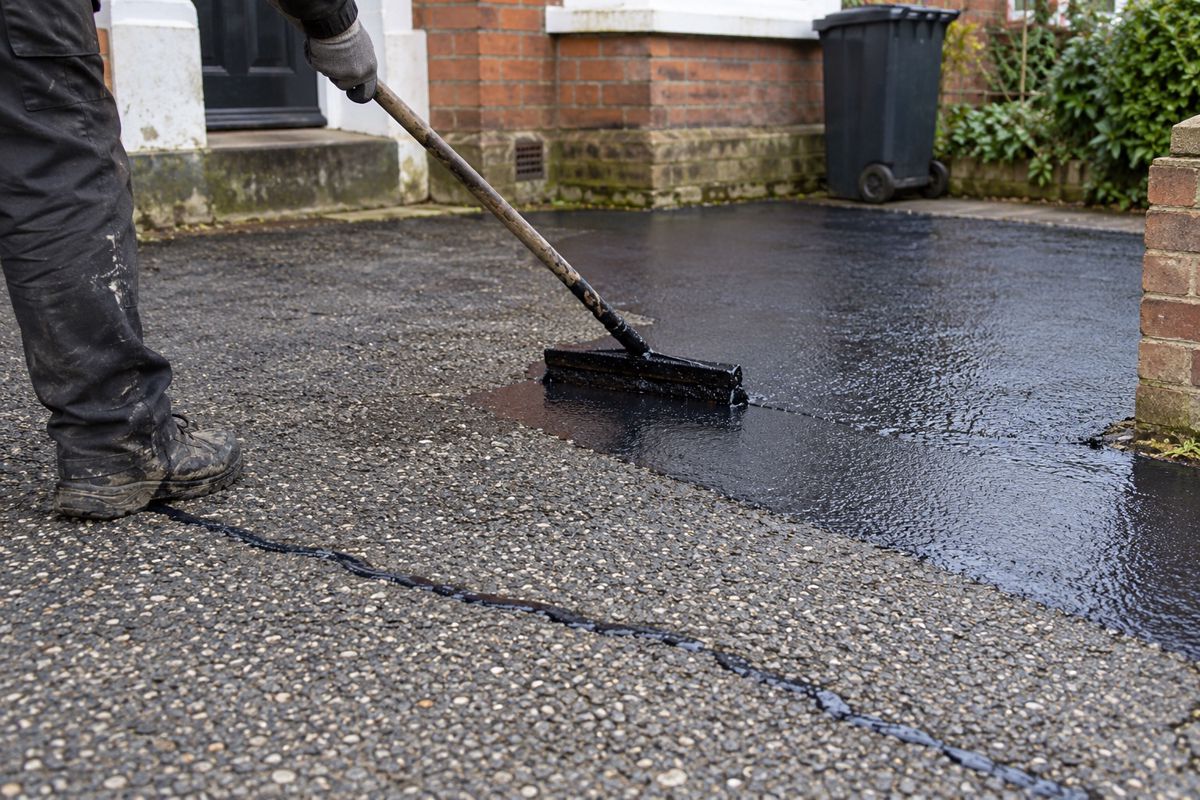
Gloved hand applying black sealer over a cleaned tarmac drive crack

Tarmac sealing in London

Asphalt sealcoating and crack filling in London

Protect a sound tarmac drive or car park and fill cracks before water gets in. We tell you honestly when sealing will not be enough.

  • Cracks cleaned and filled first
  • Honest advice on when to seal
  • Drives and car parks

Step 1 of 3

What do you need?

What is sealing, and is it the same as sealcoating?

Sealcoating is the American name. In London it is usually called tarmac sealing, and you may also see it sold as a driveway restorer. In both cases a bitumen-based coat is spread over a clean, sound surface. It slows the wear caused by sun, water, oil and fuel, and it renews the dark colour that fades over time.

What sealing does not do is fix structural problems. A coat on a sunken, broken or crazed surface hides the problem for a short while. It is for tarmac that is still in good condition but is starting to age.

If you are not sure which group your drive falls in, a site visit settles it quickly. Look for fading to grey, a rough feel, loose stones and hairline cracks, which are signs that a coat can help, and for wide cracks, dips and broken edges, which are signs that repair comes first.

Which cracks can be filled, and which need more than filling?

Cracks are the way water gets under a surface, so filling them is the most useful repair you can make to ageing tarmac. In winter the water freezes and widens the gap, and in wet spells it softens the base.

  • Hairline and narrow cracks can be cleaned out and filled with a bitumen-based filler.
  • Wider cracks may need to be cut, cleaned and filled in stages, and some need a patch.
  • A crazed pattern across a wide area usually means the base has failed, and filling will not hold.

Much of London sits on clay that moves with the seasons, and tree roots lift edges, so cracks often return along the same line. We tell you if a crack looks like it will keep moving. For deeper damage see pothole repair and patching.

What about block paving and resin-bound surfaces?

Many London drives are block paving rather than tarmac, and the care is different. The usual steps are cleaning, re-sanding the joints with kiln-dried sand and, if you want one, a block paving sealer. Resin-bound surfaces need regular cleaning so they stay open and drain well.

Our sealing work is on tarmac. If your surface is something else, ask when you call whether it is a job we take on, and we will tell you honestly. A short description and a couple of photos are enough for a first answer.

Before any coat goes on, a good contractor cleans the surface thoroughly, treats oil stains, removes moss and weeds and lets the drive dry. Sealer applied over dirt or damp does not stick, and it is one of the main reasons a sealed surface looks poor after a single winter.

We do not list prices because the right figure depends on the surface in front of us. These are the main factors:

  • the area to be cleaned and coated
  • how many cracks there are, and how wide and deep they are
  • oil stains, moss and general condition, which set how much preparation is needed
  • the number of coats and the type of product
  • access, and how much needs moving, such as cars or planters

You receive a written quote after we have seen the surface. A sound drive costs less to treat than one that has been neglected, which is a good reason to look at it early.

How long does it take, and what should I expect?

Sealing a house drive is usually a day or two of work, including cleaning, crack filling and coating. The surface must be dry, and rain soon after laying can spoil the coat, so we plan around the weather and may need to move the date.

On the day, you will need to move cars off the drive and keep people and pets off it. The coat needs time to dry before anything drives on it, and we tell you how long to wait for the product used. Expect a strong bitumen smell for a short time.

Call us if your tarmac is fading, rough or showing cracks. If the drive has gone past sealing, see tarmac driveway paving or start from the home page.

Free written estimates
Local crews
Clear timelines
Site cleanup included

Questions about paving in London

How often should a tarmac drive be sealed?

There is no fixed rule. Many installers suggest every few years once a drive is old enough to need it, but it depends on the age of the surface, the traffic and the weather. Judge by the surface instead of the calendar. If it has faded to grey, feels rough or sheds stones, sealing can help. If it is cracked widely or sunken, repair comes first.

Can I seal a new tarmac driveway?

New tarmac needs time to settle and weather before it is sealed, and many suppliers advise waiting several months. Sealing too early can trap oils and leave the surface looking patchy. Follow the advice given when your drive is laid. If you are unsure, send us a photo of the drive and the date it was laid, and we will tell you whether it is ready.

Will sealing stop cracks coming back?

Not always. Filling and sealing stop water getting in, which slows the damage. But if the ground is moving, which is common on clay, or tree roots are pushing the surface, cracks can reopen along the same line. We tell you if a crack is likely to keep moving, so you know whether a repair is a short-term fix or a lasting one.

What is the difference between filling a crack and patching a hole?

Crack filling closes a narrow gap with a flexible bitumen-based filler. Patching is for areas where the surface has broken up or sunk. The damaged piece is cut out square, the edges are cleaned and new tarmac is laid and compacted. A patch is stronger than filler, but it costs more, so we choose between the two after looking at the damage.

Is sealing worth it for a car park?

For a car park in sound condition, sealing can protect the surface from water, oil and fuel, and it makes the bays easier to mark. If the surface has failed, sealing does not help, and planing and resurfacing is the better answer. We look at the surface and explain which route makes sense before you decide.

Step 1 of 3

What do you need?

Ready when you are Call now or request a quote online. Call for a free estimate Get my free paving quote 020 7946 0921

How it works

  1. Tell us about the surface

    Size, condition and goals.

  2. Site visit and quote

    We measure and price it in writing.

  3. Prep and paving

    Base, drainage and surface done in the right order.

Takes about 30 seconds. Get my free paving quote