
Skip to content
  • Free written estimates
  • Local crews
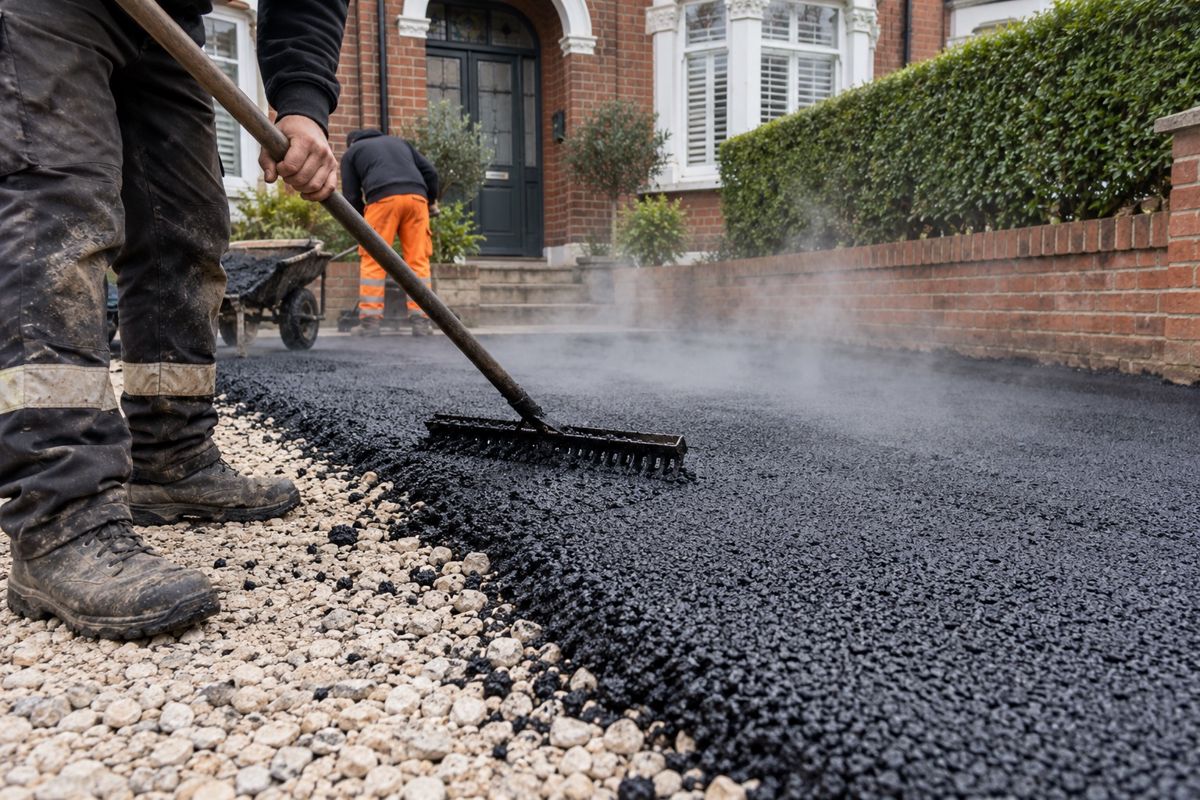
Workers raking hot tarmac on a London front garden driveway

Tarmac driveways in London

Tarmac and asphalt driveway paving in London

A new drive built from the ground up, with the base, drainage and edges done properly. We explain the council rules before you commit.

  • Site visit before every quote
  • Advice on SuDS and dropped kerbs
  • Shaped to your house and gate

Step 1 of 3

What do you need?

What does a new tarmac driveway involve?

In London most people say tarmac, and you will also see the same surface called an asphalt driveway. Either way it is a hot-laid mix of stone and bitumen, rolled flat to make a hard-wearing surface with no joints. It suits long drives, narrow side returns and awkward shapes, because it is laid and shaped on site rather than cut from pieces.

A new drive is built from the ground up, and most of the work is below the surface. A typical job covers:

  • marking out the shape and setting levels so water runs away from the house
  • digging out the old surface or soil to the depth the build needs
  • laying and compacting a stone sub-base
  • setting edge restraints or kerbs to hold the tarmac in place
  • laying the tarmac, often in two layers, and rolling it while it is hot

If you are weighing tarmac against block paving or resin-bound gravel, tarmac is usually the plainer and quicker option. The other two give you more choice of colour and pattern.

Do I need permission before paving my front garden in London?

Often you do not need planning permission, but a few rules catch people out, so check before you book any work. The main points are these:

  • Surface water. If you pave more than five square metres of front garden with a surface that does not let water soak through, planning permission is normally needed. The usual way round this is permeable surfacing, or sending the rainwater to a lawn or border inside the property. These are known as SuDS rules.
  • Dropped kerb. To drive across the pavement you need a dropped kerb. It is approved by your borough council, or by Transport for London on its main roads, and is often built by an approved contractor. It is a separate job from the driveway itself.
  • Conservation areas and listed buildings. Some London streets have extra limits on changing front gardens and boundary walls. Ask your council planning team.

Rules change and differ by borough, so treat this as a general guide and confirm the details with your council. If the drive will be tarmac, ask how the rainwater will be dealt with, because that decides whether the planning rule applies.

What problems does London ground cause for driveways?

Much of London sits on clay. Clay swells when it is wet and shrinks in dry summers, and that movement can crack a thin or poorly supported surface. A sound sub-base that spreads the load matters more here than the top layer.

Other common problems on London drives include:

  • tree roots from street trees and mature gardens lifting edges and splitting the surface
  • water pooling against the house where an older drive was laid without enough fall
  • narrow gates, parked cars and tight turns that limit what machinery can reach the site
  • old drives with a patched, uneven top that needs lifting rather than covering over

On a site visit we look at these points before we quote, and we explain what we would do about each one. Where an existing drive is only worn, sealing and crack filling may be enough, and we will say so.

We do not quote prices on this page because every drive is different. These are the things that move the figure up or down:

  • the area, which sets the amount of tarmac and stone
  • how much old surface or soil has to be dug out and taken away
  • access for machines, and how far material has to be carried
  • edging, kerbs, drainage channels or soakaways
  • any dropped kerb work, which is a separate job
  • the thickness and number of layers the ground and use call for

You get a written quote after we have seen the site, with the work described in plain terms so you can compare it fairly with other quotes. Be wary of a price given over the phone when nobody has looked at the ground.

How long does it take, and what happens on the day?

A typical home drive is a short job, often finished within a few days from dig-out to finished surface, though size, weather and ground conditions change that. Tarmac is laid dry, so heavy rain can delay a laying day.

On the laying day, expect noise, a hot bitumen smell and a roller working back and forth. Move cars off the street side if you can, and tell neighbours who share an access. Keep people and pets off the surface until it has cooled and set, and avoid turning wheels on the spot while it is new, as that can scuff the top. We explain how long to wait before the first car goes on.

Call us if your current drive is sinking, holding water or cracking beyond what patching can fix, or if you are planning a front garden change. You can also read more on the London Paving Pros home page, or see pothole repair and patching for smaller fixes.

What you can expect

1

Free written estimates

2

Local crews

3

Clear timelines

4

Site cleanup included

Questions about paving in London

How thick should a tarmac driveway be?

It depends on what will drive on it. A drive for family cars is often built with a compacted stone base, then a base layer and a surface layer of tarmac. Vans, bin lorries or heavier vehicles need a stronger build. We decide the depths after seeing the ground, because soft clay or an old failed base changes what is needed. Ask any contractor to describe the build in writing.

Can you lay tarmac over my old driveway?

Sometimes. If the old surface is sound, level and only worn on top, a new layer can go over it. If it has deep cracks, sunken areas or a failed base, laying over the top usually brings the same problems back through within a season or two. We check the surface on a site visit and tell you honestly whether to resurface or dig out.

How soon can I drive on a new tarmac driveway?

Tarmac needs to cool and set first. Many installers advise keeping cars off until the surface has fully cooled, often at least a day, and keeping heavy vehicles off for longer. Hot weather keeps new tarmac soft, so marks from tyres and stands are more likely in summer. We tell you how long to wait for your own drive when the work is finished.

Is a tarmac driveway permeable, and does it matter?

Standard tarmac is not permeable, so rain runs off it. That matters because paving more than five square metres of front garden with a surface that does not drain naturally normally needs planning permission. The usual answers are permeable surfacing or a design that sends the water to a lawn or border in the same property. Check with your borough council before you commit.

Should I choose tarmac, block paving or resin-bound gravel?

Tarmac is a plain, quick option that copes well with long or oddly shaped drives. Block paving gives pattern and colour and can be lifted for repairs, but weeds and sunken blocks need upkeep. Resin-bound gravel looks smart and drains well, but it needs a sound base and regular cleaning. The right choice depends on your budget, your house and how the drive is used.

Step 1 of 3

What do you need?

Ready when you are Call now or request a quote online. Call for a free estimate Get my free paving quote 020 7946 0921

How it works

  1. Tell us about the surface

    Size, condition and goals.

  2. Site visit and quote

    We measure and price it in writing.

  3. Prep and paving

    Base, drainage and surface done in the right order.

Takes about 30 seconds. Get my free paving quote