
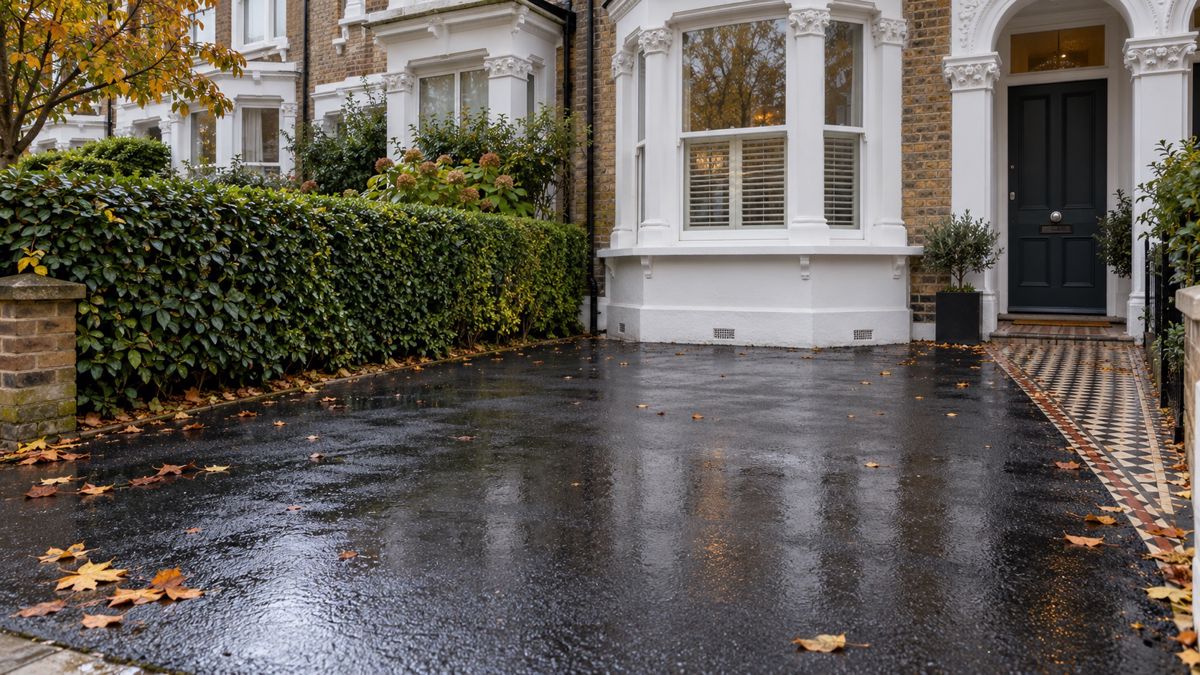
There is no single date that suits every drive. As a rough guide, many installers suggest sealing a tarmac driveway every few years once it is old enough to need it, but the right gap depends on the age of the surface, the traffic it takes and how much sun and rain it gets. This guide explains how to judge your own drive in London, and what to fix before any sealer goes on.
How often should a tarmac driveway be sealed?
Ask three installers and you may hear three answers, so treat any fixed number as a rule of thumb. Sealer makers and contractors commonly suggest every two to four years for a drive that sees daily car use. A quiet drive may go longer between coats. A drive with heavy use, or one that holds standing water, may need attention sooner.
Instead of counting years, look at the surface. Tarmac that has faded from black to grey, feels rough, or is losing small stones from the top is telling you the binder is wearing thin. That is the point where a sealer can help. If the surface still looks dark and tight, there is usually no hurry.
Remember that sealing is a protective coat. It slows down wear. It does not repair a drive that has sunk, cracked widely or broken at the edges.
Do you need to seal a new tarmac driveway?
Not straight away. New tarmac needs time to settle and weather, and many suppliers advise waiting several months before sealing. Follow the advice you are given when the drive is laid, and ask for it in writing if you can.
In the meantime, a few simple habits help a new drive:
- keep heavy vehicles off it for as long as your installer advises
- avoid turning the steering wheel while the car is standing still
- put a wide board under a bike stand or caravan jack
- clean up oil and fuel spills quickly
Hot summer days soften new tarmac, and marks from tyres and stands are common in the first season. They tend to ease as the surface hardens.
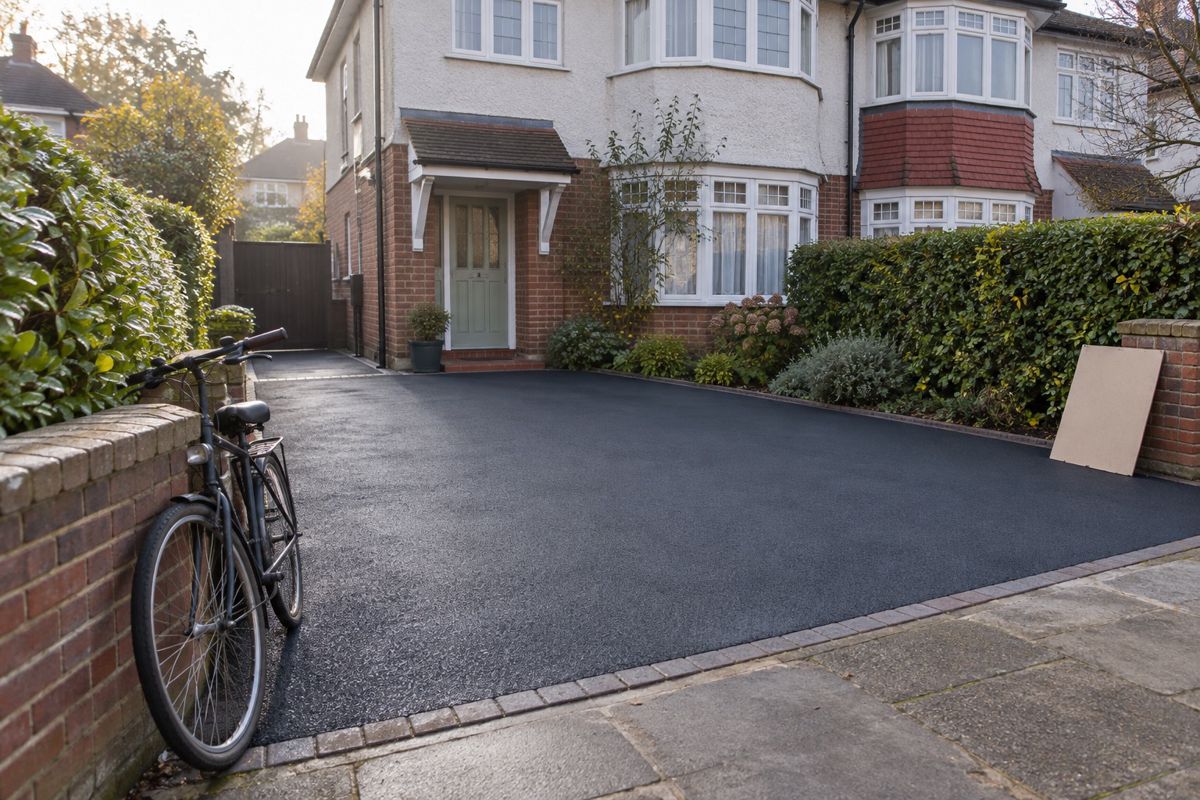
How do London weather and ground affect a tarmac drive?
London winters are mild compared with much of the UK, but frost does happen and rain is regular. Water is the main enemy of tarmac. It gets into small cracks, freezes and expands, and over time the crack widens. Summer sun then dries and hardens the surface, which makes it more brittle.
The ground matters too. Much of London sits on clay, which swells in wet spells and shrinks in dry ones. A drive on clay with a thin base can move and crack along the same lines every year. Street trees and large garden trees add roots that push up the edges. A sealer will not stop any of that, so a drive with movement problems needs a repair plan as well as a coat.
Shade is worth a mention. A drive under trees stays damp and grows moss and algae, which makes it slippery. On those drives, regular cleaning matters as much as sealing.
What are the signs your drive is ready for sealing?
Walk the drive on a dry day and check for these:
- the colour has faded from black to pale grey
- the surface feels rough and small stones are coming loose
- oil patches have soaked in where cars park
- hairline cracks have appeared, but nothing wide or deep
- water soaks in and leaves dark patches instead of running off
Now check for the signs that sealing is not the answer:
- cracks wider than a finger, or a crazed pattern like dried mud
- dips where water collects after rain
- soft or broken edges
- holes and loose patches
If you find anything on the second list, the drive needs repair first. In some cases it needs a new surface, and sealing would only hide the problem for a short while.
What should be fixed before sealing, and what changes the price?
A good job starts with preparation. The drive is swept and cleaned, weeds and moss are removed, and oil stains are treated. Cracks are cleaned out and filled with a bitumen-based filler. Holes are cut square and patched with new tarmac, and soft edges are firmed up.
Skipping this stage is the most common reason a sealed drive looks poor after one winter. Sealer over a loose or dirty surface peels, and sealer over an open crack only bridges it for a few weeks.
What changes the cost?
The price depends on the size of the drive, how much repair is needed, how easy it is to reach and which product is used. A drive that has been looked after costs less to prepare than one that has been left. Any figure you see online is a rough guide at best, so ask for a written quote that describes the preparation as well as the coating.
What if your drive is block paving or resin-bound?
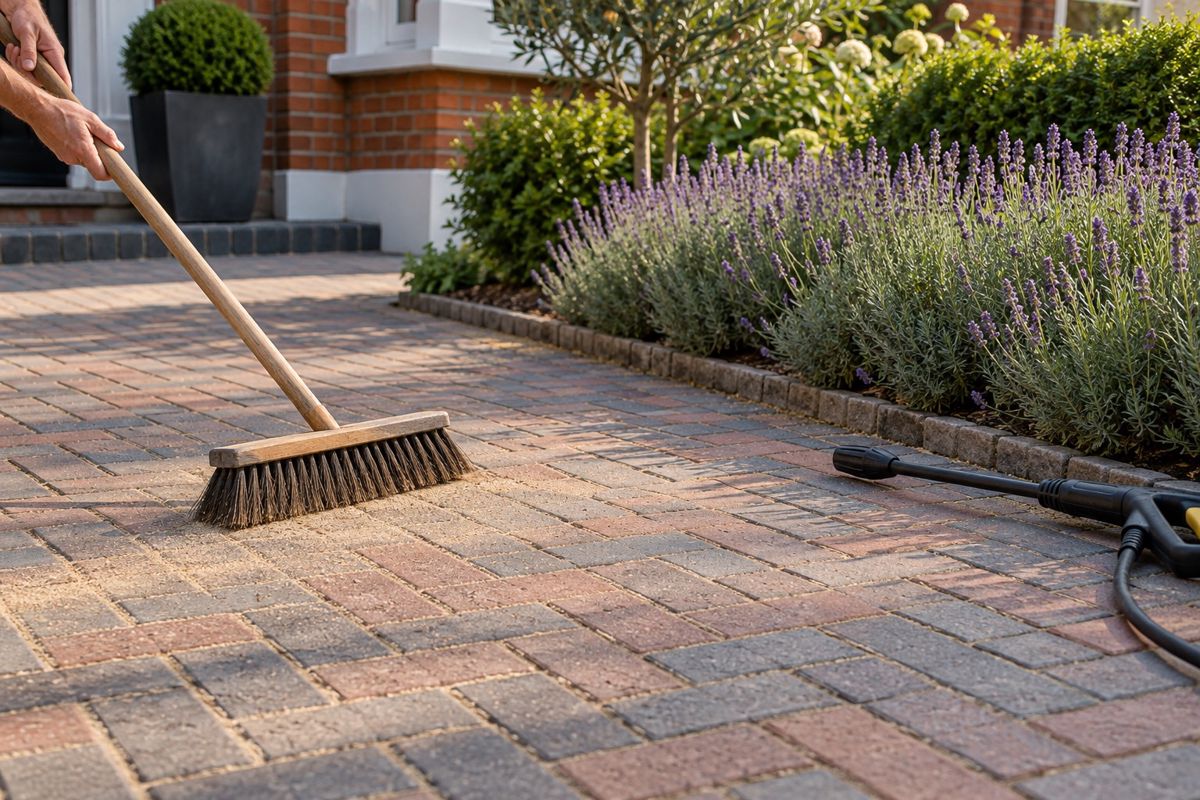
Many London front gardens have block paving rather than tarmac, and it needs a different kind of care. The usual steps are jet washing, re-sanding the joints with kiln-dried sand and, if you want one, applying a block paving sealer. Resin-bound drives need regular cleaning so the surface stays open and drains well, and they are not treated in the same way as tarmac. If you are not sure what your drive is made of, a couple of photos and a short description are usually enough for a contractor to tell you.
Whichever surface you have, check the rules before changing it. In London, paving a front garden with a surface that does not let water drain away can need planning permission, and your borough council can tell you what applies to your street.
What is the next step?
If your tarmac drive looks tired, start with a simple check. Walk it on a dry day, note the cracks and dips, and take photos. Then decide whether you need sealing, a repair or a new surface.
Our page on tarmac sealing and crack filling explains how that work is done. If the drive has gone beyond sealing, see tarmac driveway paving, or call 020 7946 0921 to talk it through with the London Paving Pros crew.